
The Local Source for News and Information Since 1980

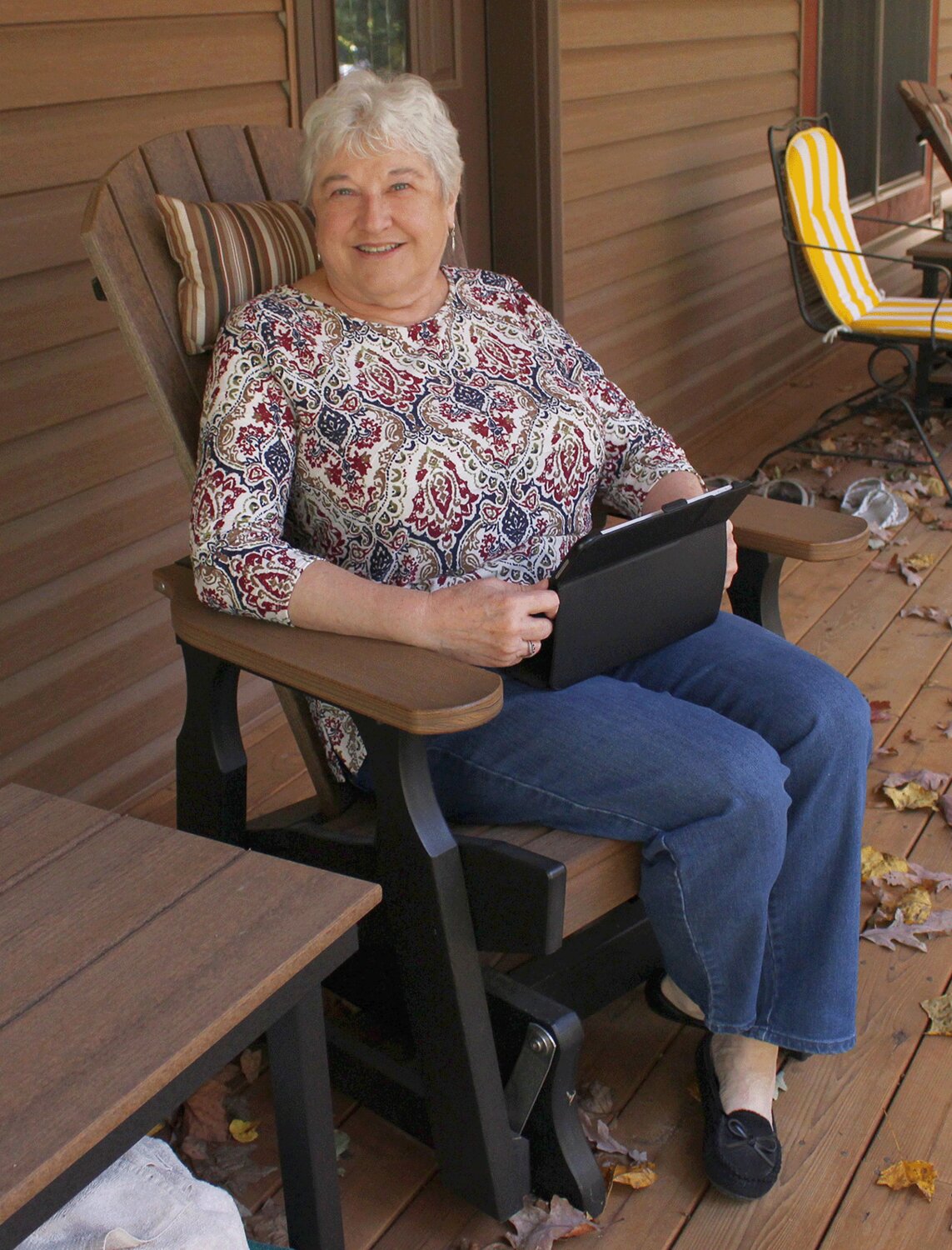

CAROLINE COUNTY - Caroline County author Saundra “Sandy” Hayman released her latest book, Wheaton Hall, this past August. Unlike her earlier works, One Summer Day and One Summer Night, which she says were “more personal experiences,” this newest book required a different kind of journey.
“Those first books were mostly about my family,” Hayman said, “The stories, for the most part, are true. I tried to connect them to things that were happening at the time, but they were more personal.” Hayman recounted having dreams about these particular books and said that they were “easier, because they came to me.” Wheaton Hall, by contrast, took pursuit and persistence. “The story was so old I had no connection to it,” Hayman explained. Unlike her other works, she had to “go after Wheaton Hall.”
The inspiration for the book came from a family connection. Hayman’s second cousin, Kenny, showed her an old postcard of Williston and told her about the family’s ties to the area and the historic home Memory Lane during the 19th century. “I was amazed that this was such a thriving little community,” she said, “There’s no evidence of what was going on in this time period. This is such a fascinating place, you know. And even though I don’t know that much about our relatives, I could create enough about people of the time who would be like them to get a story together.”
Hayman began writing Wheaton Hall in December 2024, while she was “in the midst of publishing” One Summer Day. “It was there, but I really didn’t get into it until the beginning of 2025,” she said. Some names in the book connect directly to her family, while the characters’ experiences reflect real people’s lives and work. “There are names and events and things that our relatives were a part of or connected to in some way,” she explained.
Through her writing, Hayman hopes readers will see the importance of Caroline County’s place in history. “I hope they see that in this book in particular, Caroline County was a thriving place of just wonderful people,” she said, “I hope they see there was some importance in Caroline County. We have a history here, and it’s been forgotten.” Making sure the context of the character’s landscape was historically accurate was a staple of her writing process, like mentioning “some of those people who were connected to Caroline County, or were a part of Caroline County, even briefly.”
That goal meant that historical research was a major part of Wheaton Hall. As a title abstracter by trade, Hayman’s attention to historical accuracy comes naturally. She keeps a large box of documents and notes, using old newspapers to trace what people were reading and doing during the period she writes about. She studied maps, fashion guides, and references to real hotels, furniture, and transportation methods to build an authentic world for her characters. “Even though I’m not a true historian, I did study history,” she said. “I work with history every day, and telling the truth is what I must do…people can be fictional, but the events, I want them, especially if I’m going to write about our county, I want those to be true.”
Her research also took her to meaningful local sites, including the grave of Sallie Dean, a Caroline County teenager who was brutally murdered in 1895. “I visited Sally Dean’s grave, and we had a difficult time finding it,” Hayman recalled. “And when we found it, my first thought was, ‘it’s so clean.’ It was pristine. The stone was so white and clean, (as though) someone is maintaining it. And there were some plastic flowers that were stuck in the ground in front of it…I had taken a single rose, to place there…It was touching, I felt emotional,” Hayman said that in seeing the grave for herself, the reality of Dean’s existence and tragic end “became real.”
Her passion for truth in storytelling, she said, stems from her motivation for writing her first two books, her mother’s story. “She had never been able to tell the truth. She had never been able to let that go, and it was a horrible secret. It caused a lot of problems for her and for her generations afterwards…There was a lot of suffering that occurred because the truth could not be told. And I think that’s maybe where some of this stems from. I want it out there, I want it to be real.”
She also hopes to highlight the sense of community that existed in these villages like Williston. “Community at the time was so important. They relied on each other when they had their children and when they had illnesses and other problems. Within the community, they were there for each other, and that has been lost,” she said. Although she portrays the era’s differences of class and race, Hayman said she wanted to show the ways people depended on one another in small-town life.
Hayman said the current community’s response to Wheaton Hall has been encouraging. “It’s selling, and I’m very appreciative of the local businesses,” she said, noting that copies are available at places like Clayton Farms. “I don’t know how many people realize that the book is out yet,” she added with a laugh. And for readers who finish Wheaton Hall wanting more – Hayman promises there will be. She recommends starting at courthouse records for anyone looking to research their own family histories or the story of Caroline County.


