
The Local Source for News and Information Since 1980
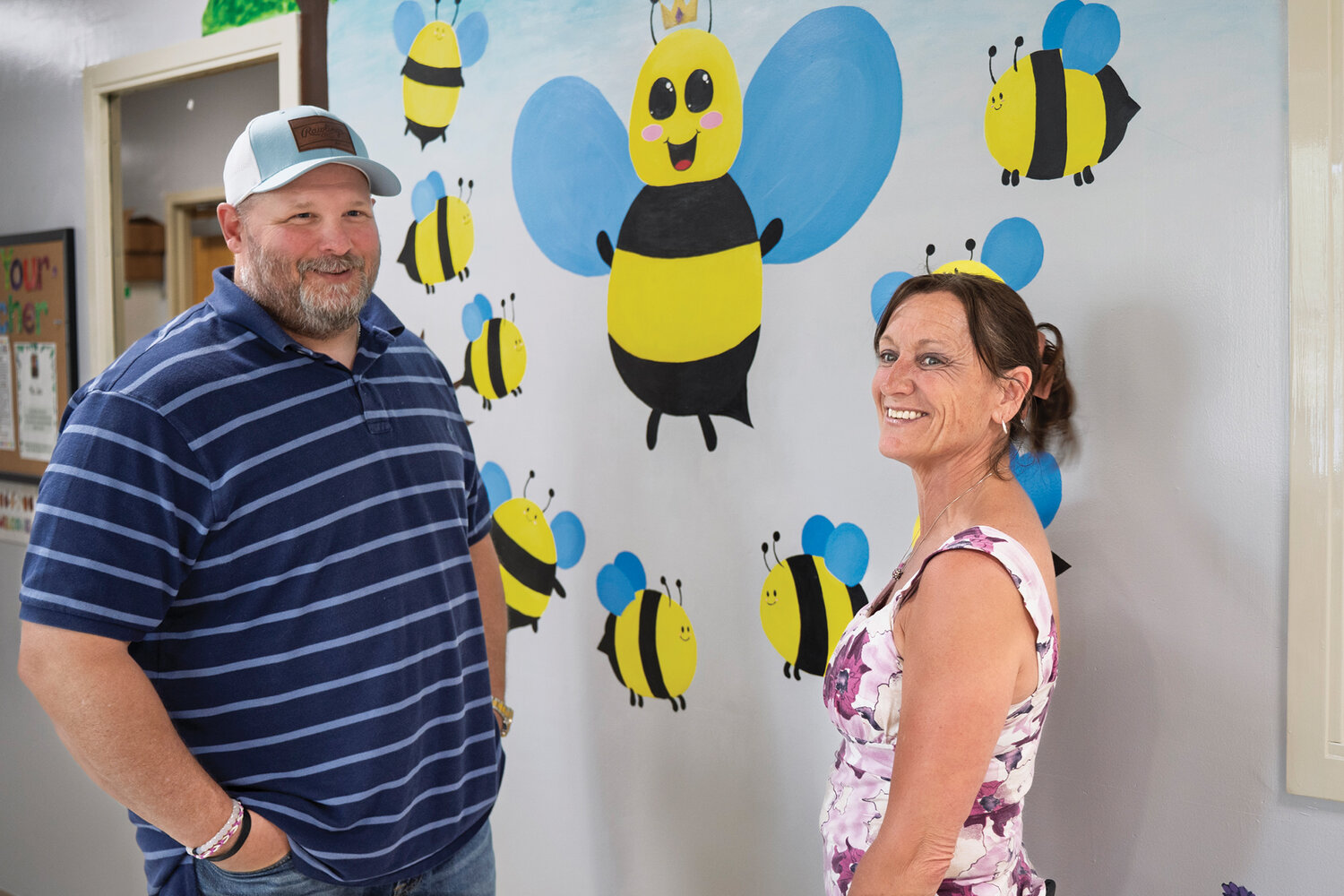


GREENSBORO – While the new executive director of the Maryland Rural Development Corporation wants to tell the community what MRDC has to offer, he also wants to divert attention away from himself.
But to know the man is to understand what drives him to help MRDC succeed in Caroline County and beyond.
Charles “Chuck” Huester III, 52, hit the ground running in mid-March and reflected on his first six weeks at the helm from his office at 101 Cedar Lane in Greensboro.
“It’s just a matter of being patient and taking things one day at a time,” Huester said. “How do you eat an elephant? One bite at a time.”
“I have a corporate finance background, and I worked for the government and for the USDA, so I bring a different perspective on things,” Huester said.
Huester, whose name rhymes with Easter, said “the focus here is largely to get the word out.”
A wide range of services
MRDC is more than Head Start and Early Head Start, although “that's the most prominent thing we do,” he said. “But part of our future plan is to re-market and rebrand and reintroduce ourselves to the community, and that's going to be my job to help do that.”
Huester commutes from his home in Smyrna, Delaware, to his offices in Greensboro and Chestertown. His working territory stretches from western Maryland through the Eastern Shore.
A white board in his Greensboro office is filled with wish list and must-do items for MDRC to accomplish in Caroline County, as “one of the poorer counties in the state.”
Because of his work with the U.S. Department of Agriculture Rural Development, Huester was already familiar with MRDC’s circuit rider program and got up to speed quickly. He easily reeled off “a lot of services that we provide, like homeless prevention, diaper distribution. We have rent assistance. We have utility assistance – that's all underneath what we would call community services.”
“We have (services) for folks who live in a home and they meet income standards that allow for us … (to) help solidify the home and keep them in the home,” he said. Those services range from weatherization and roof repairs to mold and pest eradication.
“The goal is to keep someone off the street, to keep someone in the home, and to prevent the next step in decline, helping them refocus, recenter and maybe move to something better for themselves,” Huester said.
Preventing homelessness is a key concern, and using grant funding to help house people even temporarily is important to MRDC’s mission, Huester said.
“There's a lot of folks that are in need right now, there's a lot of folks that are working poor, and there's a lot of folks who are a paycheck away from being on the street, and I think that as a society we need to show each other a little more grace –and I don't know that that's always the case,” he said.
“The whole goal of our community services is to keep people sheltered in one way or another and in some way improve their quality of life, and I think to do that you you can't judge,” he said.
Giving someone the benefit of a doubt can expand one’s capacity to care and drop ideological barriers, he said. The result is a motivation to provide the resources needed. “So I say, if you're qualified, why turn you away? If we have the money, give it to them, or give them the shelter, provide them that rent assistance.”
“I know it's temporary relief, particularly … when you're putting somebody up in a motel for two weeks, but it's some level of comfort to them for a short period of time,” Huester said. “The worst thing you can do as a grantee, in my mind, is not spend the money, because that's the easiest way for someone not to want to give you more money. What are you here for if you're not here to spend the money?”
An Eastern Shore native
The Elkton native grew up on a farm owned by his grandfather, a prominent attorney and judge who raised thoroughbred horses. Huester said his mentors, as well as his wife Aileen and three daughters, set him on a path to success. Hard work, a generous dose of good fortune and transformative experiences pointed him to his work with MRDC.
An admittedly “terrible student” who made “very poor decisions,” Huester said his eighth-grade science teacher assured him he had “so much potential.” His work building car seats for two years and meeting his future wife Aileen made him evaluate the trajectory of his life.
“I started thinking, I gotta do something better than this,” he said. He went to work as a systems analyst at the now-defunct General Motors plant in Wilmington, and during that 5-year stint, he earned his associate’s and bachelor’s degrees. He said his three co-workers “gave me grace, they gave me latitude, they helped me get where I am.”
It was also during this time that Huester “had the crazy idea to be a journalist.” He parlayed his interest in high school football into a 10-year side job covering Delaware games, including state championships and Blue-Gold games, for the NFL High School website. “It was awesome. I loved it,” he said. He also was a “get-back” coach for two years and learned much from legendary high school coach Mike Aruanno.
Huester eventually went on to earn his MBA degree in executive leadership. But it was early in his work life as a performance manager that he learned a valuable lesson from an older worker who tempered his “hardcore” managing style. “He said, ‘Listen man, if the only thing you ever see is nails, the only tool in your belt will be a hammer.’” Huester said.
Spending a month in India during his banking career was a profound and humbling life lesson for Huester, as he witnessed people living in extreme poverty within blocks of his luxurious hotel lodgings.
His Indian colleagues “were the most humble, gracious, decent people I've ever met in my life,” Huester said. “They treated me like I was their brother. And I learned from them that despite … the situations that some of the people find themselves in, they still persevere, they still are empathetic, they're still caring and they still keep things in perspective.”
“I have no complaints,” he said. “That’s what India taught me.”
But back home, his wife and children keep him anchored.
“My family has been the single most positive influence in my life,” Huester said. He’s a “girl dad” whose daughters are 29, 19 and 18 years old. He said his wife of 25 years and daughters are “smarter than I am. I'm a dude. I do dude stuff, and they help keep me centered and grounded.”
About four years ago, Chuck and Aileen Huester founded a nonprofit travel softball team to help “young ladies find a voice,” he said.
Becoming a certified hitting instructor in softball has “been very rewarding,” Huester said. “I have more fun doing that than probably anything else…. There's very few things in life you can be good at 30% of the time and be considered great, or if you do it 40% of the time, you're going to be legendary. Hitting is that hard.”
‘A really incredible opportunity’
The opportunity to join MRDC was “a happy accident.” Huester didn’t look for the job, but when it showed up in his inbox, he recognized it as a “really incredible opportunity” to use his education and skill sets. It was “the intersection of preparation meeting opportunity,” he said. It was also the opportunity to pay forward the kindness and empathy he had been shown throughout his life and career.
“When I first interviewed for the job, I was like, ‘Listen, I'm from here. I know the people here. I know what it's like to struggle. I know what it's like to be in a bad way,” he said. “What better can a human being do than to come back from where they came from and give something to the people?”
“It’s not just a job for me, it’s personal,” Huester said, adding that he had learned through the years to appreciate “how much people went out of their way to try and support me … and the empathy they showed me.”
For now, Huester said he has inherited a strong team of 115 employees, four different business lines (Head Start and Early Head Start, housing and community, the circuit rider program, and an adult education program) and good relationships, and he knows what he brings to the table. “It's not without challenges,” he said. “But if it wasn't challenging, what would be the point?”
“I knew coming into this job that I needed to be a conduit. I'm a communicator. I'm very transparent, I'm extremely honest,” he said. “You need to walk it if you're going to talk it. So, I'm not afraid to pick up a mop and scrub a floor. I'm not afraid to take the garbage out. I'm not a pretentious person. I don't care about my title necessarily. I always say to people I don't want to be right, I want to get it right,’ and whatever role I play in that is what I want to do.”
“I'm so excited about the future of MRDC, and I feel like I'm at the right place in the right time in my life,” Huester said. “Everybody's got a position to play, and if we all pull our weight, we're going to be successful, and at the end of the day, the more success we can create, the better off the community will be as a result.”
For more information about MRDC and its services, visit mrdc.net.


