
The Local Source for News and Information Since 1980


DENTON – A simple question raised last year by Caroline County Commission President Travis Breeding has resulted in Maryland law.
The question: Why not use Project Open Space funds to improve existing open space properties instead of acquiring more land? The answer was House Bill 717, which Maryland Gov. Wes Moore signed into law during a bill signing ceremony Tuesday, May 13, in Annapolis. Breeding called the bill’s passage by the Maryland General Assembly the “one bright spot in the legislative session.”
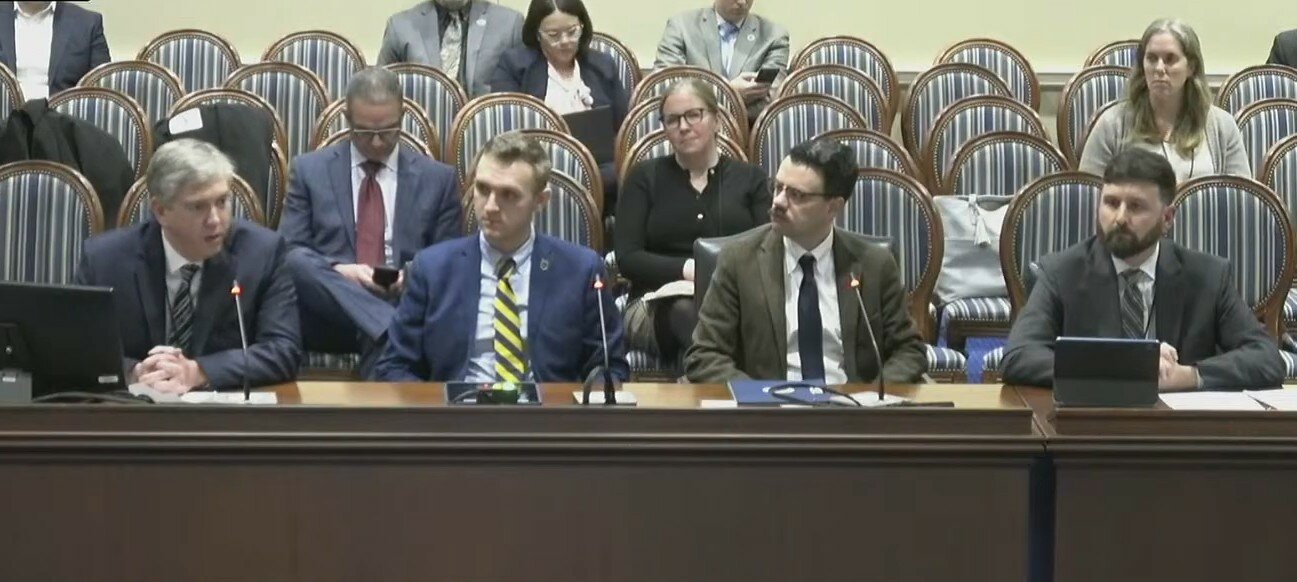
Breeding played a key role in initiating and negotiating the terms of House Bill 717 with Department of Natural Resources personnel. He also testified on Feb. 12 during the Environment and Transportation Committee’s hearing in Annapolis.
“I believe the three of us feel like we own enough property, and in this budget climate, we don't really want to take any more property off the tax rolls and have to be responsible for maintaining it,” Breeding said at the Feb. 11 meeting of the County Commissioners. “So, we're asking the state to give us the freedom to use the money that is supposed to be used for property acquisition and planning to be used to develop some of the park properties that we’re already in.”
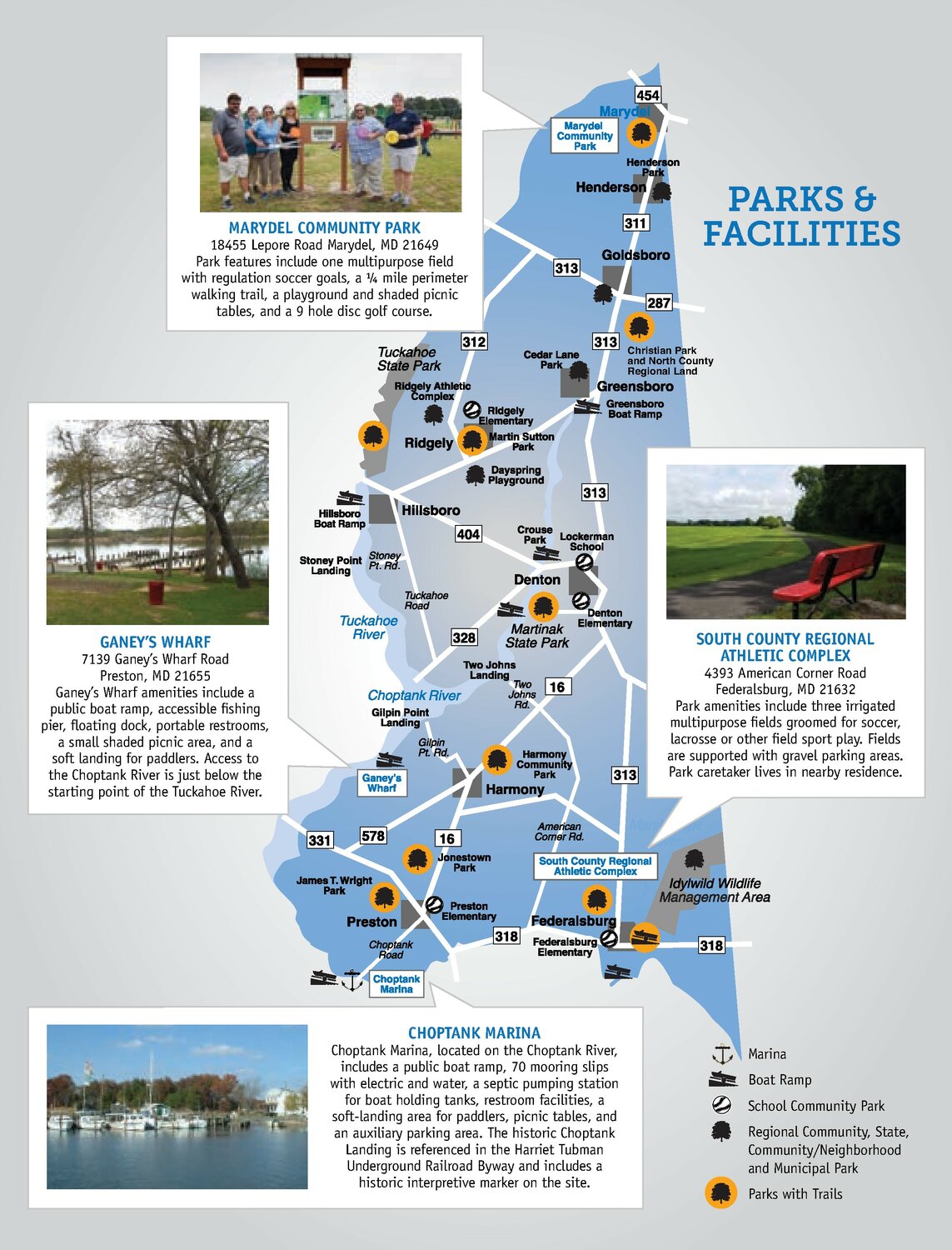
During his testimony, Breeding said, “Caroline County has played an important role in conservation efforts. In 2016 we met our land acquisition goal, helping Maryland exceed its goal of conserving 30% of the state's land by 2030. We currently manage about 506 acres, with an additional 45 acres set aside by Caroline County Public Schools. However, over half of those acres remain underdeveloped or completely undeveloped, and I’m approached from constituents all the time: ‘Why are you guys buying more property when we've got all this land that we need to do approvements to.’ This bill allows us that flexibility to deliver the essential park amenities for our residents.”
“While POS has been instrumental in preserving open space, the reality is that land alone does not meet the needs of our communities,” the letter stated. “Without the necessary infrastructure – trails, facilities, playgrounds, and accessibility improvements – these spaces remain underutilized.”
Caroline County Recreation and Parks Director Jamie Beechey said Breeding’s advocacy “has been really amazing.”
“I'm not familiar with people working with Recreation and Parks to help them – from any elected levels – in my life,” Beechey.
At the Commissioners’ May 6 meeting, Breeding said Beechey explained early in his term how Project Open Space worked. “And I said, ‘Well, we've got plenty of property. Let's stop buying property.’ And she said it was going to take … the state legislature to get that done.”
“Commissioner Breeding and I sat down and we were talking about it one day, and he said, ‘We should go talk to DNR.’ So, he set up a meeting” with Hillary Bell, director of DNR’s Land Acquisition and Planning Unit, Beechey said.
“One of the things that I thought was so great is when (DNR) Secretary (Josh) Kurtz testified on behalf of the bill, he gave a shout out to Caroline County, and I was so proud.”
“We often go so unseen and unheard,” Beechey said. “And obviously it was rough year on the solar side of things and this, but this one little bright shining moment is like, here's little Caroline County going, ‘Hey, over here, over here.’”
Putting aside enough money to improve existing POS property has been a challenge, Beechey said.
The money sitting in the acquisition pot of money is about $445,000, Beechey said.
“It costs so much to do projects,” Beechey said. “I mean, even a playground you can't really do for under $150,000 anymore.”
Beechey and other Recreation and Parks directors have been limited to $25,000 annually for using acquisition funds to develop or update their 5-year LPPRP Plan, and “stacking” those funds to reach $125,000. With the amended bill, counties can now apply for up to $125,000 in any given year. Other provisions help streamline the process for local jurisdictions to access POS funds.
Beechey has a wish list, but public input will be critical as the department begins updating its 5-year LPPRP for DNR, due by the end of calendar year 2026. She said she would like to have “some of those community meetings early and figure out where the most need is” while aligning with the county’s Comprehensive Plan revision.
On her list is ballfield lighting in Sharp Road Park, which has already been approved, developing North County Park, and eventually lighting a multipurpose field there.
“I was very tickled about House Bill 717,” Beechey said. “Now it's just a matter of what do we want?”
“Since 1969, POS has enabled the expansion of parks, trails, and open spaces across Maryland, offering communities vital health, recreational, and economic benefits,” according to Conduit Street, MACo’s online newsletter. “But as counties meet or exceed ambitious land acquisition goals, local needs are evolving. Maintenance, facility upgrades, and accessibility improvements are becoming top priorities, and HB 717 responds to this shift.”
The bill also establishes a new Land and Property Management Program within the DNR.
“Counties are stretching limited resources to maintain vibrant, welcoming parks and open spaces,” Conduit Street reported. “HB 717 ensures that POS evolves to meet today’s needs. More flexibility means counties can respond faster and more effectively to community priorities, all while continuing Maryland’s legacy of preserving and enhancing public lands.”


