
The Local Source for News and Information Since 1980
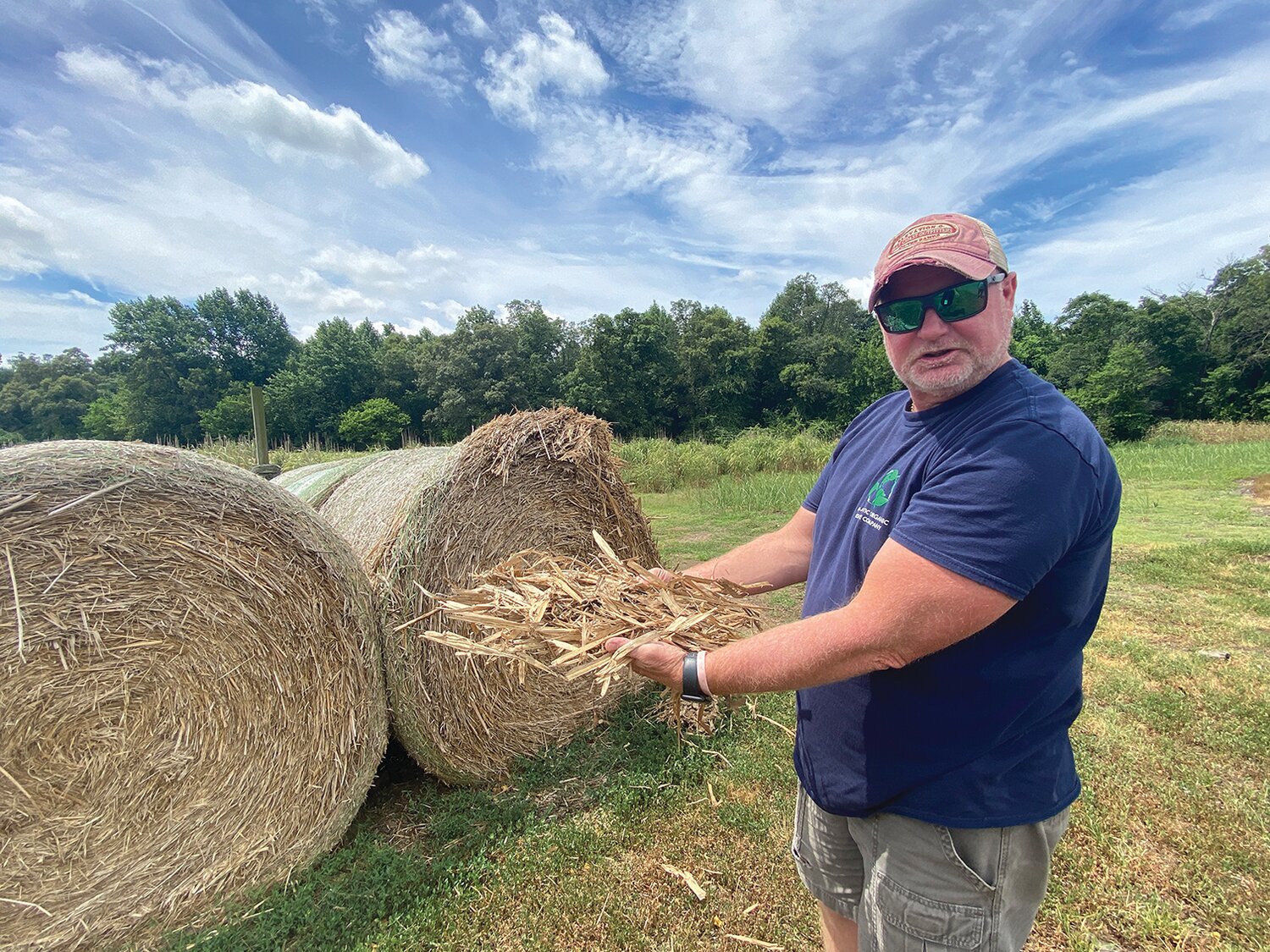


RIDGELY – It’s been a decade since Caroline County farmer Dave Tribbett took a chance with a new crop, but it’s proven to be a boon to both his farming operation and the environment.
What began as an experiment now has the numbers to back up the value of planting giant miscanthus grass, and Tribbett, 47, is determined to help others learn from his experience and award-winning best practices.
“I've proven the industry will work here on the Shore,” he said. It’s now time to give “opportunities to some of these other farmers to be able to grow this and diversify their farming methods the way I did.”
He and his wife Spring own Twin Maples Farm LLC near Ridgely. He raises about 175,000 meat chickens in eight houses; grows lima beans, corn and soybeans; and runs an organic composting business. He also grows 750 acres of giant miscanthus.
His conservation practices in farming earned him a nomination for the Sand County Foundation’s Maryland Leopold Conservation Award in 2024, which “honors farmers and forestland owners who go above and beyond in their management of soil health, water quality and wildlife habitat on working land,” according to the foundation’s website. He was one of four finalists for the award.
Nominating Tribbett was Mountaire Farms, which now uses miscanthus grass bedding in more than 70% of it contracted chicken houses.
“Dave has been an invaluable independent contractor and supplier to Mountaire Farms, demonstrating exceptional dedication to conservation and sustainable practices through innovative approaches and commitment to excellence,” the nomination letter stated.
In 2020, the Tribbetts were finalists for the U.S. Poultry & Egg Association’s Family Farm Environmental Excellence Award.
Caroline County roots
As a student at North Caroline High School, Tribbett began working at the now-defunct Southern States in Denton and became adept at blending fertilizers.
A Caroline County native, he comes from a Caroline farming family, and his father David Tribbett Sr. taught agriculture at Queen Anne’s County High School for many years. Dave Jr. became involved in 4-H Club and raised everything from rabbits to Black Angus calves. “I was very competitive. I did not want to lose at the fair,” he said.
When Dave Jr. began farming, he wanted to create a sustainable alternative to synthetic fertilizers, so he founded Mid Atlantic Organic Resource Company (MAORC) in 2011.
Two years later, Travis Hedrick of AGgrow Tech, headquartered in High Point, North Carolina, approached Tribbett with the idea of growing giant miscanthus, and they have been partners in the enterprise ever since.
Miscanthus grass proved to be a key component MAORC’s organic compost. Tribbett uses all natural heat by mixing in miscanthus leaves and allowing time and natural processes to heat the organic compost mixture.
Giant miscanthus, a tall ornamental grass used originally in golf course landscaping, is a non-native species, but as a sterile hybrid it isn’t invasive because it doesn’t produce seed. But its deep root system plays a valuable role in capturing nutrients that pollute the Chesapeake Bay.
Working with Hedrick, Tribbett planted the environmentally friendly, annually renewable biomass crop on less efficient acreage. Along a woodline where deer were accustomed to feeding on corn and sunlight was less abundant, he planted a 60-foot buffer on 16 acres.
He now grows 750 acres of the perennial grass.
A multi-faceted crop
From January through July 2024, MAORC had transformed more than 11.6 million tons of grain waste, poultry manure, poultry byproducts, hatchery and egg waste and other agricultural products into organic compost, or fertilizer, “diverting over 27,000 tons from landfills” since 2011, according to Mountaire.com.
But the grass has other uses. Tribbett has discovered a vast market for the dried, chopped-up leaves as bedding, or litter, in chicken houses. Research has confirmed it’s a healthier alternative to sawdust and woodchips.
“In the chicken world, our job as farmers is to be as efficient as possible,” he said.
As miscanthus grass “continues to be widely adopted throughout the poultry industry in Maryland, the need to import alternative bedding sources will be reduced,” according to Mountaire.com.
“This not only minimizes the carbon footprint associated with transportation,” the website noted. “It also alleviates pressure on local timber and forestry industries, which do not have the capacity to meet the demand for bedding in Maryland.”
Mountaire Farms was the first to adopt miscanthus leaves as bedding material. “It’s the only company I sell to because I can only manufacture enough for this one company. That's why I’ve got to plant 250 more acres,” he said.
“Our biggest demand is bedding right now,” he said. Tribbett is exploring the feasibility of setting up an operation to sell bagged litter, possibly by fall or winter of 2025. The bedding is also beginning to gain popularity in the horse breeding community, and a potential partnership with the American Rabbit Association may be in the future, Tribbett said.
Besides its applications in poultry bedding, miscanthus is being used to manufacture biodegradable food containers made solely from the grass. Tribbett hopes to supply containers to the Ridgely Lions Club for its famous strawberry shortcake served at the Strawberry Festival, to be held May 25 this year.
Researchers are on the verge of developing the grass as a biofuel.
Tribbett is partnering with the USDA, which is studying the production of miscanthus grass (as well as switchgrass) weighing possible environmental risks and benefits on Delmarva. The USDA estimates about 4,000 acres planted in miscanthus grass would be required to meet the bedding needs of Delmarva’s 5,000 poultry houses. Switching from corn and soybeans to miscanthus for those acres would result in greater nutrient reduction by tens of thousands of pounds.
He’s pleased with the way “the chicken industry is taking the lead on this,” he said. “It proves a point that the industry as a whole is not sitting behind; they're moving forward with more sustainable (practices).”
Gov. Wes Moore and his cabinet visited Tribbett’s farm on June 14, 2024, to learn about the benefits of miscanthus. USDA researchers said that using miscanthus as a stream buffer “can significantly reduce the nutrient runoff in the watershed.”
Maryland Agriculture Secretary Kevin Atticks was impressed with the benefits of the new crop. He said he gained “a really big understanding of the ecological benefit, carbon sequestration, (rain) water capture, remediating the soil to keep it from running into the streams – all of those checked plus, plus, plus, plus.”
“But hearing from Dave – there's new opportunities out there to see if we can get manufacturing in here … That would be incredible.” Atticks said. Tribbett said he is working with the Secretary “on getting cost-share for other farmers.”
“It's been very, very gratifying to hear from the guys that do use your stuff, and for the governor to take time out of his day and come down and really see what's going on,” Tribbett said. “We're representing Maryland. We're fixing problems in the state of Maryland.”
Since last summer, Tribbett said the demand for miscanthus is focusing more on “water buffering for the Chesapeake Bay, which is good.” He and Hedrick have been asked to duplicate their business in other states.
With saltwater intrusion becoming a problem on the lower Eastern Shore, planting miscanthus may help farmers diversify and remain viable. Farmland that “was written off” is being put “back into production,” Tribbett said.
“Being able to share what's working with others – it's something I enjoy doing, and I like being one of the best,” Tribbett said. “And if you can pass your methods that are working to others, and it performs everything at the end, it just makes the industry more successful as a whole.”
The possibilities are seemingly endless for this farmer with deep Eastern Shore roots. Even using the invasive blue catfish as fertilizer is on his radar.
After several years of struggling to make farming a profitable business, Tribbett is eager to see what the future holds.
“Hitting rock bottom (financially) was best thing that ever happened to me,” Tribbett said. “I wish I didn't have to go down that route, but it taught me. I learned a lot of lessons that I can pass on to farmers that are in the struggles where I was in the past and hopefully turn them around, too.”
As a native son and earnest steward of the land and the Chesapeake Bay, he strives to preserve both. He is moving soon to a new farm where he wants to attract bobwhites (quail) back to the area.
For Tribbett, chicken and miscanthus are both beneficial for helping to feed the world and grow a new commodity with so much potential.
Chicken is the cheapest protein source for families globally, he said. But miscanthus is an up-and-coming resource for Caroline County.
“That's why they call it the Green Garden County,” he said. “It's good to be a leader on something like this. And really, to know what you're doing is making changes in a positive way, it’s pretty cool.”


