
The Local Source for News and Information Since 1980


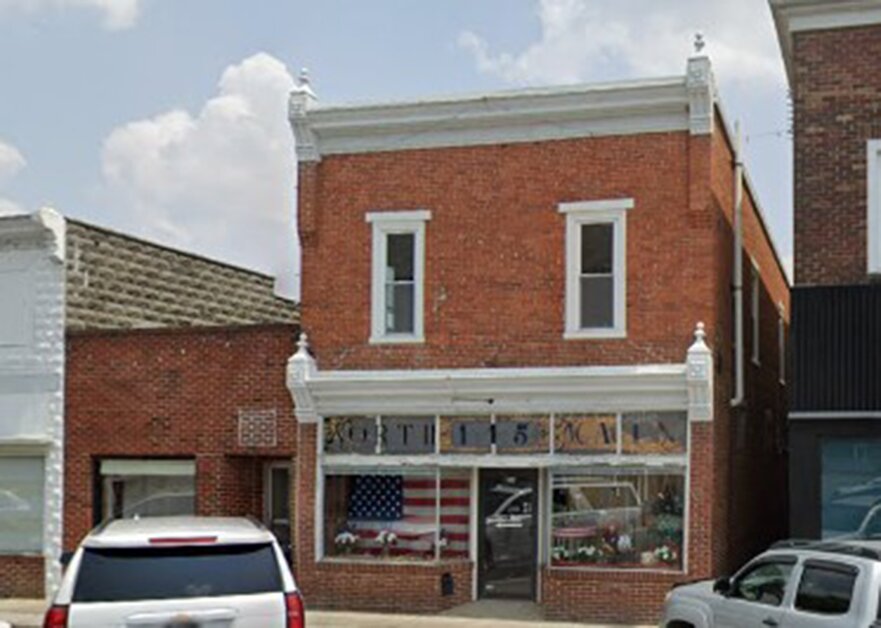


FEDERALSBURG – The Easton-based Chesapeake Multicultural Resource Center will soon be branching into Caroline County with a resource center in downtown Federalsburg.
ChesMRC provides a variety of services to immigrants in the mid-Shore area. Even as shifts in federal immigration policy are poised to affect the local community, Executive Director Matthew Peters and his staff hope their expertise will prove helpful.
At their June 2 meeting, the Federalsburg Town Council approved a 6-year lease for the town-owned 115-117 Main Street property to ChesMRC. The building will be used as a “hub for nonprofit and government agencies such as the Caroline County Department of Health and Social Services to use to provide direct access to resources for Federalsburg community members,” Town Attorney Lyndsey Ryan said during the meeting.
According to the terms of the lease drawn up by Ryan, rent would be waived for the first three years, and then monthly rent of $575 would be established for years four through six, and ChesMRC would be granted the right of first refusal. Caroline Better Together has been instrumental in helping ChesMRC become established in the county.
ChesMRC is partnering with the Caroline County Department of Social Services and the Caroline County Board of Education to help provide SNAP and Nutrition Supports to “promote equity and combat hunger” in “in two high poverty under-resourced geographic areas in the county,” according to an April 3 press release from the Mid Shore Health Improvement Coalition. The two geographic areas are the northern end southern ends of the county.
The release announced that ChesMRC is one of four national grantees from Share Our Strength’s No Kid Hungry in partnership with the American Public Human Services Association. The other three grantees are based in Illinois, North Carolina and California.
According to Peters, the goodwill grant money is available to fix the roof, mitigate mold and water damage, and refurbish the building. “We do want to get started right away,” he said at the June 2 meeting.
Peters said on June 26 he would like to open the Federalsburg hub in September. “We're going to invest at least $50,000 to fix this place up,” he said. That includes a new roof and fixing areas of rot, and replacing the air conditioning units. Some interior patching, painting and cleaning will create a welcoming space. “We don't need too much razzle dazzle to provide our services,” he said.
The main building will feature a welcome center in the front, with private offices in the back for consultations. The smaller building, a former restaurant, may involve future collaboration with the Chesapeake Culinary Center. Peters said he would like to model the hub after the One Mission model in Cambridge “a few years down the road,” he said.
Across the street is Ebenezer convenience and grocery store that caters to the Haitian and wider community. Being able to have everything in a compact area downtown benefits those with no transportation, especially in excessively hot or cold weather, Liliana Ochoa said. She is ChesMRC’s benefit outreach specialist.
“I think it'll be good synergy to get people downtown, to stay longer, to get more things done in one spot, maybe to build and help create more small businesses,” Peters said. “So, I see a lot of good things with investment into this building.”
“It's a direct investment into the people here,” Peters said. “What we know from working with the immigrant community is there's so much of an entrepreneurship mentality. There's a lot of possibilities for more small businesses.”
“It's probably not going to be some giant corporation that comes in,” he said. “It's going to have to be a whole hodgepodge of small businesses building a main street again, building more (foot) traffic downtown, more people visiting, more people having things to do. … And hopefully revitalization of a lot of the towns out here would be the end goal.”
“Those groups of immigrants are already here, and what we do is we help them to navigate and learn the culture so they are not like a group that is isolated from the rest of the community,” Ochoa said. “(They’re) going to be part of the community, creating wealth and not causing trouble.”
Peters is working with Alouse Jean, a 20-year resident of Federalsburg and ChesMRC’s Haitian Outreach Coordinator. She is fluent in Haitian Creole, French and English. She is also active in the Haitian Church of the Nazarene, which is celebrating its 40th anniversary this year.
In a June 26 interview, Jean said the Haitian community, which, according to DHS, was granted Temporary Protected Status (TPS) as far back at 2010 with several additional extensions, is “scared right now because they don’t know what will happen to them.”
“Most people – they come here for better opportunities,” Jean said. “They just take care of their families. They’re loving and caring people. They just want to survive.” She said constant challenges are finding housing and transportation, or having a valid work card, but not being able to get a job.
On June 27, the U.S. Department of Homeland Security announced the termination of TPS for Haiti. “The TPS designation for the country expires on Aug. 3, 2025, and the termination will be effective on Tuesday, Sept. 2, 2025,” the release stated.
“The environmental situation in Haiti has improved enough that it is safe for Haitian citizens to return home,” a DHS spokesperson said. “We encourage these individuals to take advantage of the Department’s resources in returning to Haiti, which can be arranged through the CBP Home app. Haitian nationals may pursue lawful status through other immigration benefit requests, if eligible.”
Peters said the situation is unprecedented, and the potential consequences would negatively affect communities as well as families.
“Is this going to happen? In the past, when this has been threatened to happen, at the last second it's blocked or it's changed,” Peters said.
“Half a million Haitian nationals in the United States are poised to lose their protected status and their authorization to work on August 3,” he said. “The largest population of Haitians is in Florida. The second largest population is in Boston, and the third largest population is on the Delmarva Peninsula. We've never dealt with anything like this before, so there's no roadmap.”
ChesMRC has served over 9,000 clients in its 13 years. In fiscal year 2025, the non-profit will have served 3,000 clients with 7,500 unique services, which include, for example, applying for a work card, renewing a SNAP benefit or translating a birth certificate. Peters said. “Every year we see more services provided to each client, which is pretty cool.”
But in Federalsburg, staff will provide a helping hand. The hub will be able to provide services to the wider Haitian community and other immigrants in Salisbury and Cambridge, and towns in southern Delaware.
Because ChesMRC works with clients on an individual basis, the organization has no model for dealing with a large group of people faced with deportation. “There's no historical context for this,” Peters said.
“We’ll be with them to help navigate,” he said. “Luckily, we have the expertise where we can navigate the legal avenues with immigration.” He said those avenues concern health care, insurance, food insecurities, and “the services already existing here in Caroline County.”
“We're just gonna focus on the client,” he said. “We don't know what the end result is going to be.”


